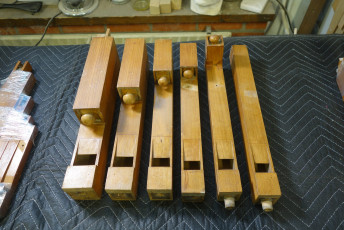
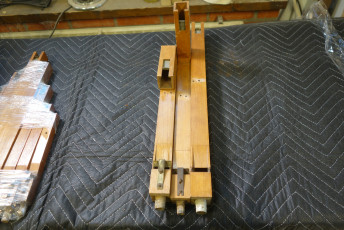
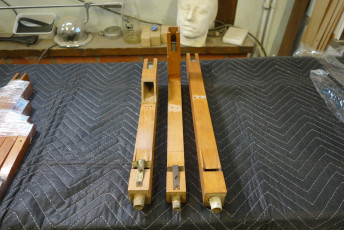
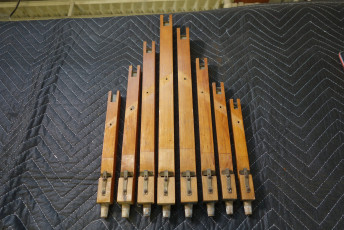
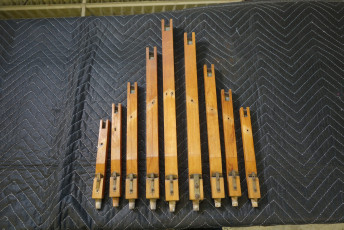
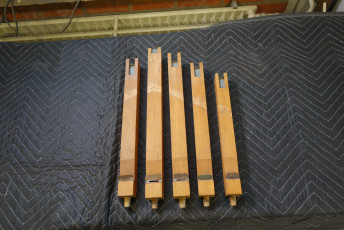
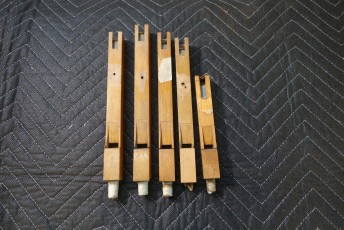
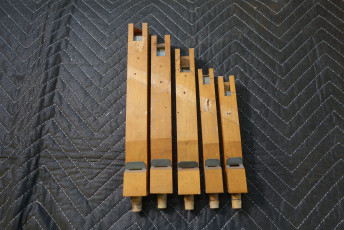
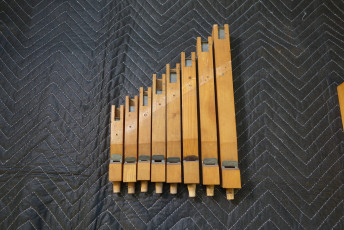
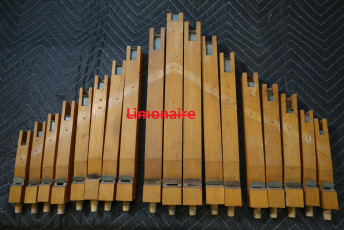
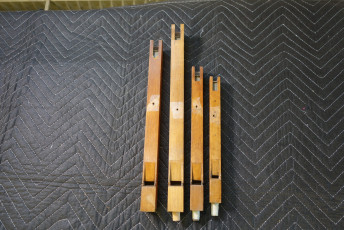
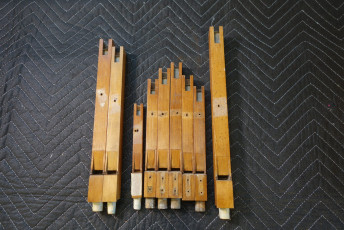
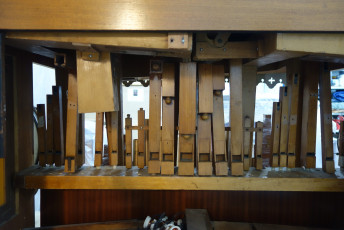
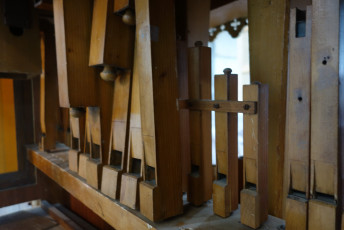
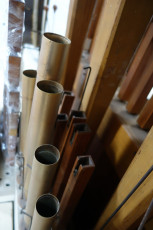
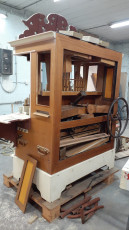
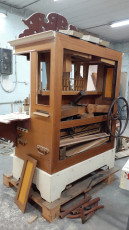
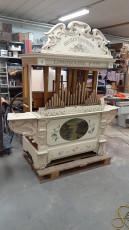
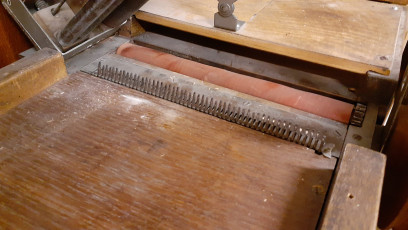
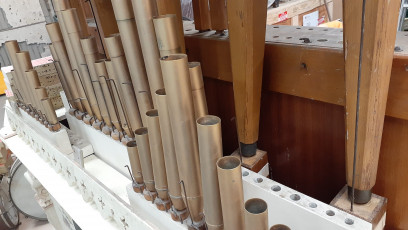
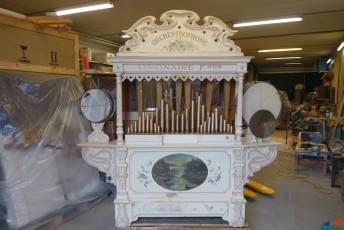
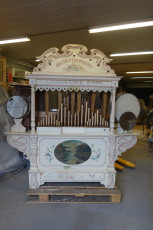
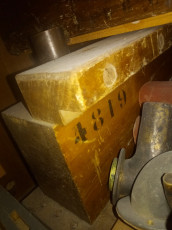
France vers 1929. Très rare instrument avec cette gamme. L’orgue est en attente d’une complète remise en état. Un partie de la tuyauterie est absente.
Limonaire 52-Key Organ
France, around 1929. Very rare Limonaire with unusual 52 keys scale. The organ needs a complete restoration.
14 000 € non-restauré / Unrestored
42 000 € restauré / Restored

Plus d’informations concernant ce Limonaire 52 après la galerie
More details about the instrument at the end of the page
Plus d’informations concernant l’orgue
(English version after)
Le Limonaire n° 4819 est répertorié dans les registres Limonaire comme un modèle 46 touches qui aurait été acheté par un certain Maurice Georges, forain à Bouzancourt dans la Haute-Marne. Le numéro précédent, 4818, lui correspond à un 52 touches mentionné comme étant en exposition dans le magasin Limonaire.
Il reste donc encore à élucider de quel instrument il s’agit. Peut-être en découvrant d’autres numérotations ou indications dans l’instrument.
L’orgue aurait été fabriqué autour de 1907. Sa gamme est particulière et assez unique, les autres Limonaire 52 notes comportent moins de notes mais des registres automatiques. Sur cet instrument les registres sont activés via des tirettes sur le coté.
La gammes de cet instrument s’établit comme suit :
• Basse (6): F G A C D E
◦ Bourdon, doublé à l’octave
◦ Activé par le 4° registre : Trombone
• Accompagnement (10): F G A A# B C D E F F#
◦ Flûte bouchée, doublé à l’octave
• Chant (18) : G A A# B C C# D F F# g a a# b c c#
◦ Flûte ouverte + violon
◦ Activé par le 3° registre: violon rang 2
◦ Activé par le 1° registre: clarinette et violon rang 3
• Contres chants (12) : C C# D E F F# g g# a a# b c
◦ Flûte ouverte
◦ Activé par le 2° registre: Clarinette et violon
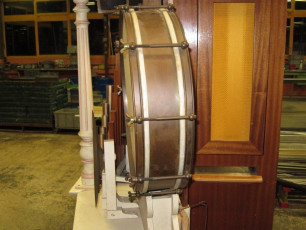
• Grosse Caisse
• Caisse claire 2 x
• Chef (automate)
• Touche STOP
Total 51 soupapes sur le sommier + touche STOP : 52 touches sur le clavier.
Cet instrument comporte 52 touches pour 46 notes, contre 41 notes pour les modèles ultérieurs. Mais surtout, les plans sonores sont répartis différemment. Sur les 52 ultérieures il n’y a que 3 plans sonores:
• 8 basses
• 11 accompagnements
• 22 chants
Cet instrument a deux basses de moins, mais surtout un contre chant de 12 notes supplémentaires lui donnant d’autres possibilités musicales.
L’orgue a subi plusieurs transformations mais une grande partie des éléments sont d’origine.
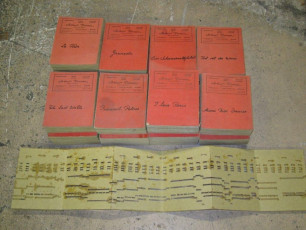
Il a été restauré/modifié par M, Prinsen, le clavier a, par contre, été “connecté” différemment pour placer les notes de manière chromatique, ce qui n’était pas le cas à l’origine. L’instrument possède 19 cartons Prinsen spécialement réalisés et en excellant état.
D’autre part, nous avons pu retrouver une série de cartons Limonaire qui semblent correspondre à la gamme originel. Il s’agit d’une centaine de mètres de carton Limonaire 52 T sans registre avec 6 basses qui avaient été achetés avec un lot d’autres cartons Gasparini. Il semble que M, Cochard possède également des cartons pour ce type de 52 première génération. M Cochard nous a par ailleurs confirmé l’intérêt musical de cette gamme.
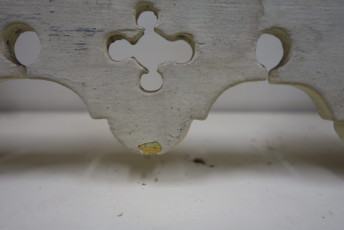
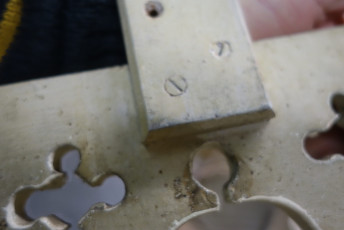
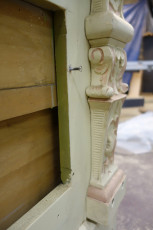
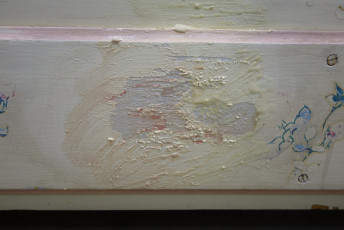
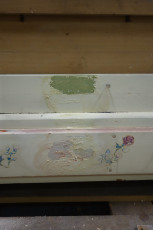
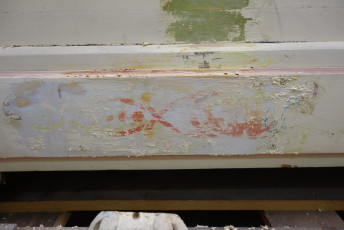
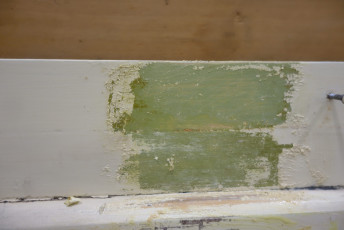
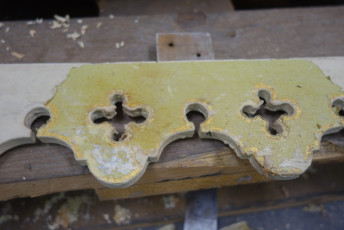
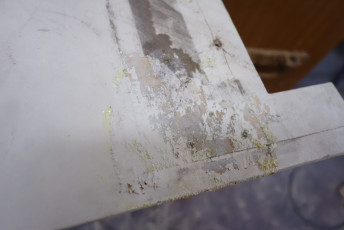
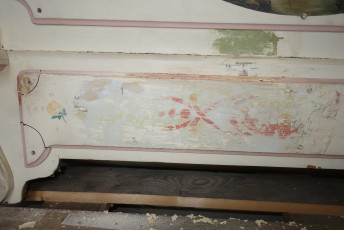
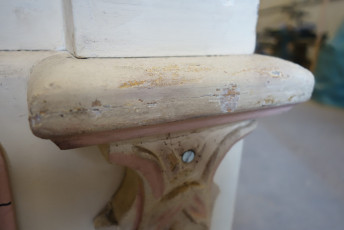
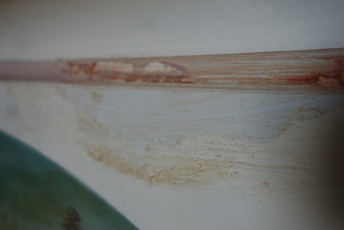
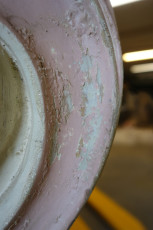
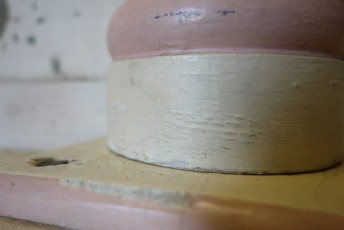
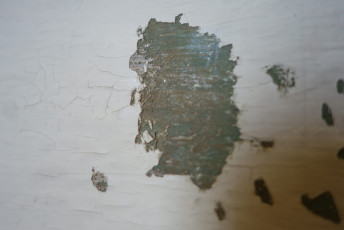
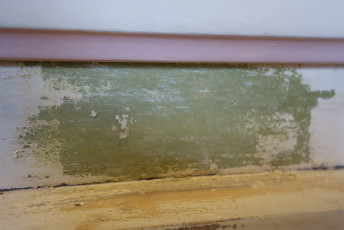
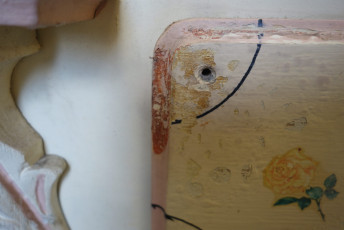
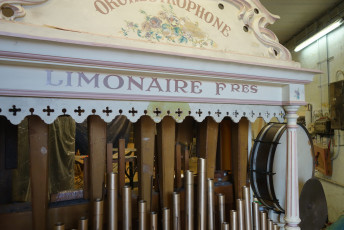
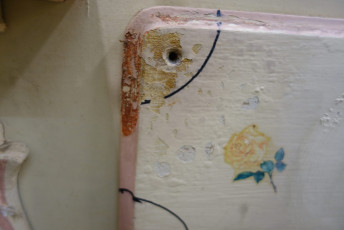
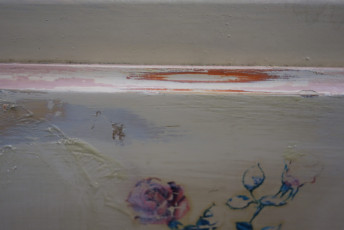
La façade et le meuble sont complets. Les parties sculptées et le fronton sont en bon état. L’ensemble a été repeint. Nous avons, à plusieurs endroits, identifié les coloris d’origine, vert et or, ainsi que certains motifs géométriques.
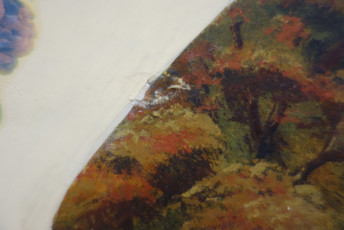
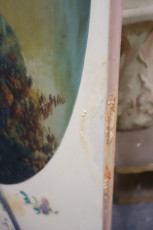
Le médaillon central (représentant un paysage) semble être d’origine.
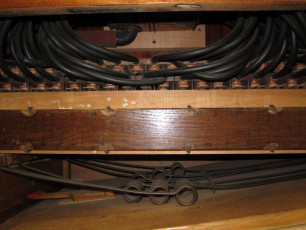
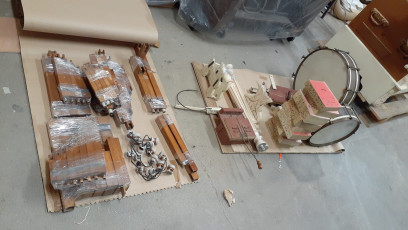
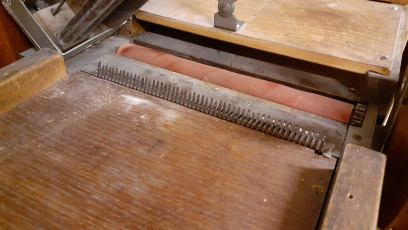
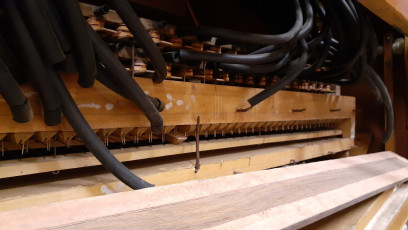
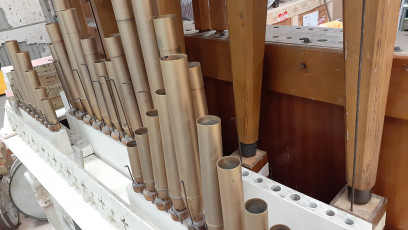
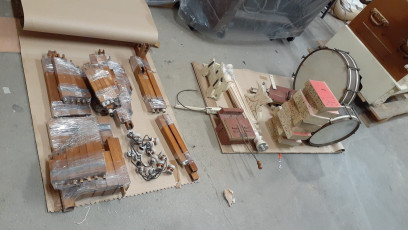
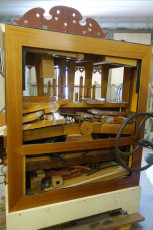
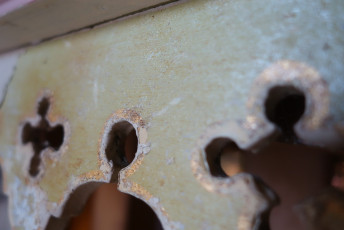
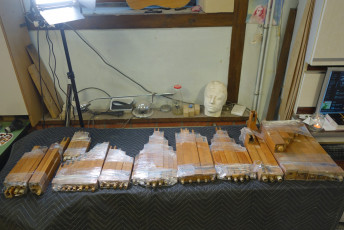
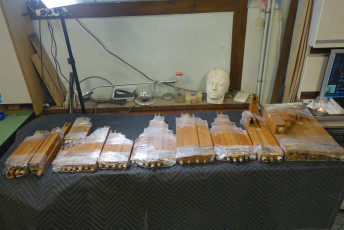
L’instrument a été trouvé partiellement démonté. Une grande partie des tuyaux de façade sont présents mais une partie des jeux intérieurs et les tuyaux de basses (sous l’orgue) sont manquants.
Restauré, cet instrument sera très particulier dans la mesure où c’est une gamme unique. Peut-être un prototype de gamme abandonnée par la suite.
Nous n’avons pas entamé la restauration, celle-ci pouvant aller dans des directions très différentes.
D’un point de vue musical:
• La gamme pourrait rester comme actuellement: les notes dans l’ordre sur les cartons, 52 notes Limonaire première génération cartonc Prinsen
• La gamme remise comme sur les cartons d’origine, ordre des notes «mélangé» sur les cartons, 52 notes Limonaire première génération cartons Limonaire
D’un point de vue esthétique:
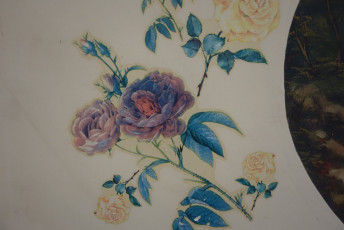
• Les couleurs pastelles actuelles pourraient être conservées. L’ensemble serait nettoyé et les quelques dégâts ou manques seraient réparés.
• L'instrument pourrait être remis dans son état d'origine sur base des éléments de décoration retrouvés sous les couches de couleurs actuelles.
Il n’y a pas de solution meilleur qu’une autre, mais d’un point de vue historique, notre atelier privilégierait le retour à la gamme et l’esthétique d’origine.
More information about the organ
The Limonaire No. 4819 is listed in the Limonaire registers as a 46-note model that was apparently purchased by a certain Maurice Georges, a fairground operator from Bouzancourt in the Haute-Marne. The preceding number, 4818, corresponds to a 52-note model mentioned as being on display in the Limonaire shop.
Therefore, it is still unclear which instrument this refers to. It may be clarified by discovering other serial numbers or markings on the instrument. The organ is believed to have been manufactured around 1907. Its range is unusual and quite unique; other Limonaire 52-note models feature fewer notes but have automatic stops. In this instrument, the stops are activated via pull knobs on the side.
The range of this instrument is as follows:
- Bass (6): F G A C D E
◦ Bourdon, doubled at the octave
◦ Activated by the 4th stop: Trombone - Accompaniment (10): F G A A# B C D E F F#
◦ Stopped flute, doubled at the octave - Melody (18): G A A# B C C# D F F# g a a# b c c#
◦ Open flute + violin
◦ Activated by the 3rd stop: violin rank 2
◦ Activated by the 1st stop: clarinet and violin rank 3 - Countermelodies (12): C C# D E F F# g g# a a# b c
◦ Open flute
◦ Activated by the 2nd stop: clarinet and violin - Bass drum
- Snare drum 2x
- Conductor (automaton)
- Stop key
Total: 51 pipes on the windchest + stop key: 52 keys on the keyboard.
This instrument has 52 keys for 46 notes, compared to 41 notes in later models. But more importantly, the sound divisions are arranged differently. In the 52-note later models, there are only 3 divisions:
- 8 basses
- 11 accompaniments
- 22 melodies
This instrument has two fewer basses, but a 12-note countermelody division, giving it additional musical possibilities.
The organ has undergone several modifications, but much of its original parts remain.
It was restored/modified by M. Prinsen; however, the keyboard was “reconfigured” to place the notes chromatically, which was not the case originally. The instrument has 19 Prinsen paper rolls specially made and in excellent condition.
Additionally, we have been able to find a series of Limonaire books that seem to correspond to the original range. These include about a hundred meters of Limonaire 52T rolls without without automatic registration but with 6 basses notes, which were purchased along with other Gasparini rolls. It appears that M. Cochard also possesses rolls for this type of 52 first-generation model. M. Cochard has further confirmed the musical interest of this range.
The facade and the case are complete. The sculpted parts and the pediment are in good condition. The entire piece has been repainted. In several places, we have identified the original colors: green and gold, along with some geometric patterns.
The central medallion (depicting a landscape) appears to be original.
The instrument was found partially disassembled. Most of the facade pipes are present, but some of the internal ranks and the bass pipes (under the organ) are missing.
When restored, this instrument will be very unique, as it features a one-of-a-kind range, could-be perhaps a prototype of a range that was later abandoned.
We have not yet begun the restoration, as it could take several different directions.
From a musical perspective:
- The range could remain as it is now: the notes in order on the rolls, 52 notes Limonaire first-generation Prinsen rolls
- The range could be restored as on the original rolls, with the notes “mixed” on the rolls, 52 notes Limonaire first-generation Limonaire rolls
From an aesthetic perspective:
- The current pastel colors could be kept. The whole organ would be cleaned, and any damage or missing parts would be repaired.
- The instrument could be returned to its original state based on the decorative elements found under the current paint layers.
There is no one best solution, but from a historical standpoint, our workshop would prioritize returning the instrument to its original range and aesthetic.